
It is one of the most natural assumptions a parent can make. The grades are good, so the child must be doing fine. For results-focused families, strong marks are reassuring, and rightly so. Yet many parents quietly carry a second, harder question beneath the first. My child is doing well, but are they actually learning? It is a question worth taking seriously, because critical thinking in schools, the ability to understand and apply knowledge rather than simply recall it, is what turns good marks into a genuine education. At Regent’s International School Bangkok, this distinction shapes how children are taught from their earliest years.
What a good grade can hide
Emma Henderson, Head of Primary and Early Years at Regent’s, has seen the gap that can open between marks and understanding. “I have encountered children who score well on paper but struggle to think for themselves,” she says, “because they have been taught to memorise and replicate rather than understand.”
This reflects a wider concern many parents have when asking, do good grades mean a good education. A child can learn to chase marks and still miss what matters most. “What is lost,” Emma explains, “is depth, curiosity and intellectual resilience.” A good grade shows what a child could do on one day, under exam conditions. It does not always show whether they truly understand, or whether they could use that knowledge somewhere new.
How real understanding shows itself
If a test score is not the full picture, what is? For Emma, the proof of learning is whether a child can use what they know beyond the lesson in which they learned it. “Children need to be able to apply their knowledge beyond an individual lesson,” she says.
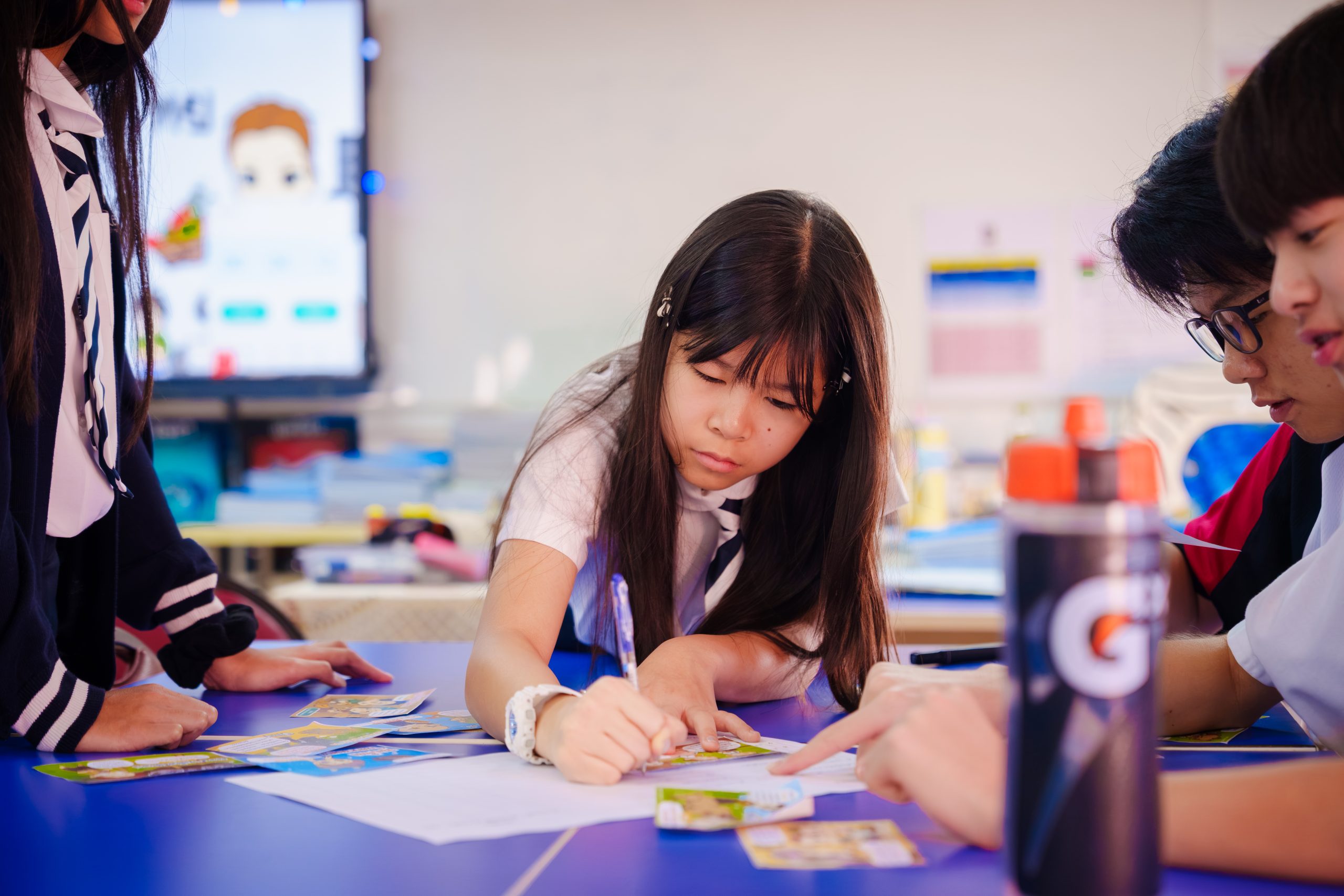
This is why active learning in international schools matters, and why Regent’s builds so much of its teaching around topic work and projects. “This is shown through topic work and projects where multiple skills are required to achieve an end goal,” Emma says, “and this shows us that a child has fully understood and can use their knowledge.” Because learning is organised around connected topics rather than isolated lessons, children have to apply what they know in new situations, which is exactly how teachers can see that understanding has taken hold and will last.
Building thinkers, not just high scorers
Helping children think for themselves is, in the end, the more valuable gift. Emma is careful not to dismiss results, but to put them in proportion. “Learning is not a linear journey of collecting high marks,” she says. “It is a far more fluid process built on core competencies and thinking skills.”
Parents who want their child to excel academically are not choosing between grades and thinking. The two reinforce one another, because a child who genuinely understands a subject is better placed to perform in it. A cross-curricular approach helps children connect ideas across subjects and carry skills from one context into another. These are the capabilities that serve a young person long after a particular set of facts has faded, in further study, in work and in life.
None of this means grades do not matter. They do, and a strong education should produce both. The difference is whether results are the whole goal or the visible sign of something deeper. As Emma puts it, children should not just learn what to think in order to pass a test, but how to think in order to navigate their future.
For families weighing up an international school in Bangkok, that is a question worth asking of any school. At Regent’s International School Bangkok critical thinking is embedded across the curriculum, helping children think for themselves and apply their learning with confidence. Parents who would like to understand how it shapes their own child’s learning are warmly welcome to continue the conversation with us.