


Deep and purposeful thinking does not develop in a single lesson. It builds gradually, through repeated opportunities to question, reflect, and make sense of ideas in greater depth.
At Regent’s International School, Bangkok, this development is intentional. Teachers focus not only on what students learn, but on how they think, helping them build critical and analytical thinking skills step by step.
Encouraging thinking through meaningful questions
One of the most effective ways to develop thinking is through the questions students are asked.
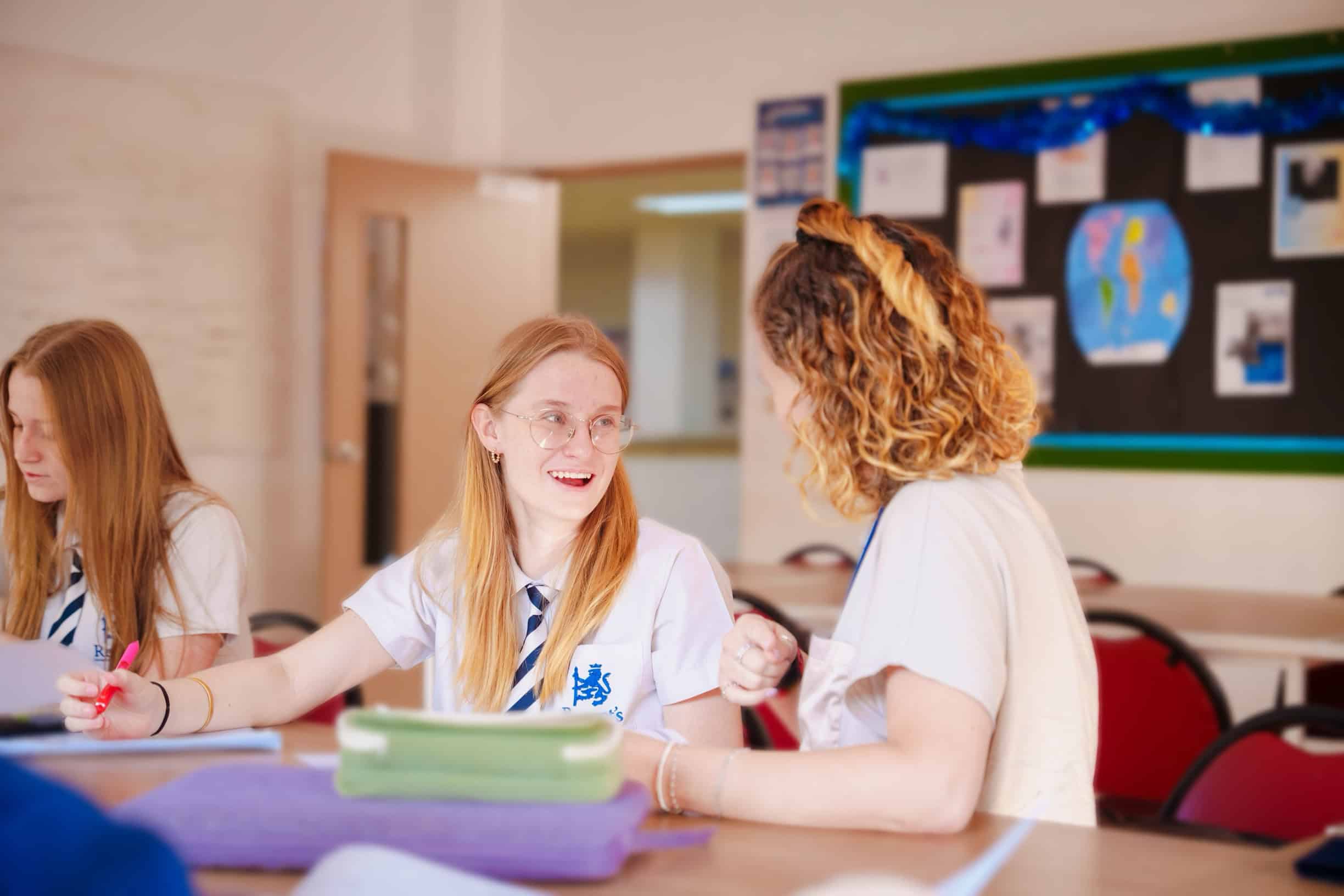
Teachers at Regent’s Bangkok use open-ended, inquiry-based questioning to encourage students to explore ideas rather than simply recall information. These questions invite students to explain their reasoning, consider different possibilities, and engage with more complex thinking.
In the classroom, this often involves problem solving activities where students actively work through challenges to independently come to conclusions, rather than being given immediate answers.
Sam Peyton, Head of Sixth Form (Years 12-13) shares:
“Developing critical thinking comes through active engagement with problem solving and open-ended questioning, helping students explore ideas and build deeper understanding.”
This approach ensures that students are not only learning curriculum content but also developing the ability to think independently and apply their knowledge.
Helping students make connections across learning
Strong thinking is also built by helping students connect ideas.
Rather than treating subjects separately, teachers encourage students to link their learning across different contexts. This may include connecting new knowledge to prior learning, relating concepts across subjects, or applying ideas to real-world situations.
Teachers also draw on students’ own experiences and observations, helping them see how learning relates to their lives beyond the classroom.
“Students strengthen their thinking by making connections between subjects, prior knowledge, and real-world contexts;, helping them understand the relevance of what they are learning,” explains Sam.
By making these connections explicit, students develop a more integrated understanding of knowledge. This supports deeper thinking and helps students retain and apply what they have learned.
Using real-world contexts to deepen understanding
Learning becomes more meaningful when students understand its relevance.
At Regent’s Bangkok, teachers use real-world contexts to place learning in the present, helping students see how ideas apply beyond school. This might involve exploring current issues, practical applications, or real-life scenarios connected to the subject being studied.
When students see the purpose behind their learning, they are more likely to engage deeply and think critically about the material.
This approach also supports problem solving skills, as students learn to apply their understanding in realistic and meaningful situations.
Feedback that supports thinking and improvement
Feedback plays a central role in helping students develop their thinking over time.
At Regent’s International School Bangkok, feedback is not designed to simply indicate whether work is correct, instead teachers provide clear guidance on what has been done well and how students can develop further.
Importantly, feedback is not a one-way process.
“Feedback should be timely, specific, and include clear targets for improvement. It is most effective when it involves discussion between the student and teacher,” adds Sam Peyton.
Through these conversations, students gain a clearer understanding of their thinking and how they can refine it. This helps them take a more active role in their own learning.
Reflection as a tool for deeper learning
Reflection is another key element in developing strong thinking skills.
Students are given regular opportunities to reflect on their learning, both within lessons and through structured points in the school year. These reflection points allow students to consider what they have understood, where they need to improve, and how they can approach future learning.
This process is supported by teachers, tutors, and coordinators, ensuring that reflection is guided and meaningful.
“Multiple reflection opportunities are built into learning, allowing students to think about their progress and develop a clearer understanding of how they learn,” explains Sam.
Over time, this helps students develop greater awareness of their own thinking processes, an important part of metacognition, and independent learning.
Building thinking that lasts beyond the classroom
The development of critical thinking, analytical reasoning, and problem-solving skills is the result of consistent teaching approaches that encourage students to question, connect, and reflect over time.
At Regent’s International School, Bangkok, these approaches are embedded across the school, from early years to secondary ensuring that students develop thinking skills progressively as they move through their education.
For parents, this provides reassurance that learning goes beyond surface understanding. It reflects a structured and sustained approach to developing the skills students will need for future study and life beyond school.
Parents who would like to explore how thinking is developed in the classroom are always welcome to speak with the academic team and see how these approaches are applied across the school.